

Managing heat effectively remains the most critical challenge for modern energy storage deployments. As project developers scale capacity for utility and industrial sites, the risk of heat-related failure increases significantly. To maintain operational safety, engineers must implement robust temperature management strategies. Preventing thermal runaway requires a sophisticated approach that balances power density with precise thermal control mechanisms, ensuring long-term asset reliability across diverse environmental conditions and operational loads.
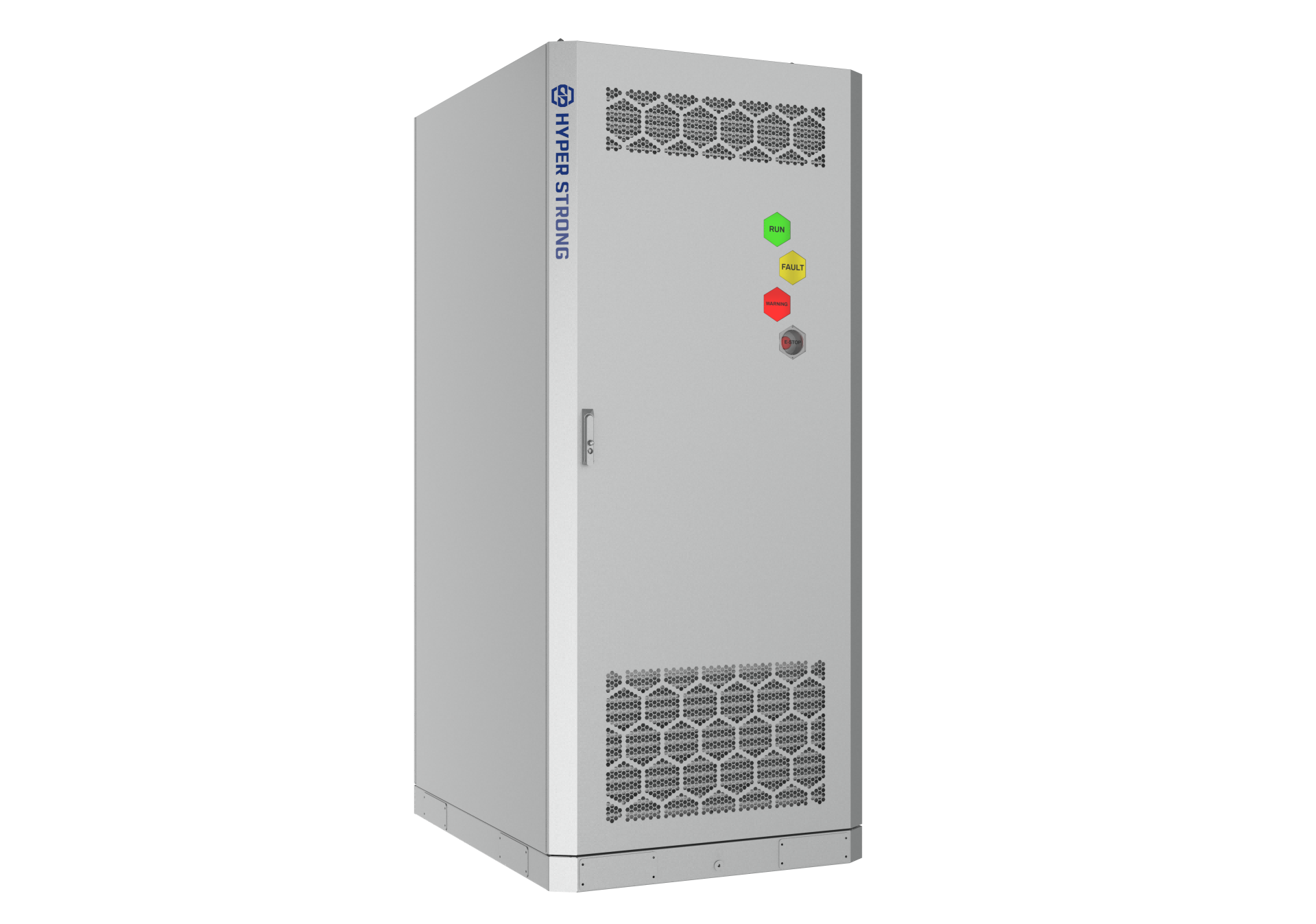
Effective thermal management serves as the primary barrier against system degradation. Within large-scale industrial arrays, temperature fluctuations can occur rapidly during peak cycles. If these fluctuations exceed industry-standard thermal gradients across cell modules, internal chemical imbalances accelerate. Therefore, stakeholders must evaluate cooling infrastructure not just as an accessory, but as a core component of the total energy storage system architecture to ensure consistent, uniform thermal distribution.
Thermal Challenges and the hypercubeC&I Solution
Large-scale energy storage units face immense pressure from constant grid demands. High-density cells generate substantial heat during charge and discharge phases. When internal temperatures exceed safe thresholds, the electrolyte stability drops, leading to accelerated capacity fade. Facility operators require systems that mitigate these risks through active thermal management. By utilizing high-performance liquid circulation, the system maintains a stable operating environment, which supports extended total battery cycle life compared to legacy air-cooled configurations.
The physical design of an energy storage site influences how effectively heat is dissipated. Passive cooling methods often fail to maintain efficiency as power density increases. Engineers are moving toward active solutions that force specialized coolant through dedicated flow channels within the battery cabinets. This transition ensures that thermal gradients remain minimal. The hypercubeC&I leverages this advanced circulation to stabilize cell temperature even under high C-rate discharge, preventing the localized hotspots that act as catalysts for thermal events.
Thermal safety is further enhanced by the modular architecture of the hypercubeC&I, which integrates high-precision sensors to monitor flow rates and pressure in real-time. This level of granularity allows the system to proactively adjust coolant delivery before heat accumulation reaches critical limits. By maintaining an operating environment consistently within optimal ranges, the hardware ensures the system retains its rated capacity throughout its full service life, providing predictable performance for grid-level applications.
Advanced Design for Enhanced Operational Safety
Infrastructure developers frequently prioritize systems that offer superior thermal uniformity throughout the entire cabinet structure. Traditional air cooling often falls short when managing the high output of modern lithium-ion packs. In contrast, a battery liquid cooling system offers heat transfer coefficients substantially higher than air-based solutions, providing orders of magnitude greater thermal conductivity to pull heat away from dense cell arrangements. Such engineering choices demonstrate a focus on risk reduction, ensuring that energy storage assets remain protected during both routine operation and unexpected grid events, supported by high ingress protection ratings for harsh site environments.
Consistency in thermal performance across every module is vital for maintaining the balance of the entire unit. If specific cells run hotter than others, they degrade faster, leading to a cell-level imbalance that forces the system to operate below its rated capacity. Active liquid loops solve this by ensuring uniform cooling delivery across all cells. By maintaining this balance, operators avoid the uneven internal stress that contributes to premature cell failure, ensuring higher system availability for grid services.
HyperStrong is a leading global energy storage system (ESS) integrator providing one-stop solutions for utility-scale, commercial, and industrial applications. Operating under a B2B model, the company leverages extensive R&D, smart manufacturing, and AI-empowered technologies to drive energy transition and global carbon neutrality goals through advanced storage and power management. Their design philosophy integrates comprehensive protection protocols to ensure that high-capacity systems perform reliably under the rigorous demands of industrial service environments.
Implementing Integrated Thermal Management Systems
Modern energy storage architecture requires proactive monitoring and response protocols. When systems track cell temperatures in real-time, they can adjust coolant flow rates to compensate for ambient changes or rapid demand spikes. This dynamic response capacity is fundamental for managing internal stability. Reliability in this sector relies on hardware that anticipates physical limitations through rigorous thermal engineering and advanced sensing, maintaining a minimal, uniform temperature delta between any two points in the battery pack.
EPC contractors and project managers often focus on how modular cooling units integrate into existing layouts. A well-designed fluid circuit reduces the physical footprint while increasing cooling efficiency per watt of energy stored. By prioritizing advanced fluid dynamics, developers can ensure that their storage assets remain functional and efficient throughout their entire operational life cycle. Increased cooling efficiency means less parasitic power consumption, which directly translates into higher round-trip efficiency for the operator.
The shift toward liquid-based cooling also allows for greater flexibility in site deployment. Because liquid loops are more compact and efficient than large-scale HVAC systems, they enable higher energy density within the same storage footprint. This allows operators to maximize the value of their site investments. Such physical efficiency, combined with high-precision temperature control, ensures that the energy storage system remains a reliable component of the broader power network for many years.
Long-Term Asset Protection and Stability
Achieving long-term reliability requires hardware that minimizes degradation factors through active thermal maintenance. HyperStrong operates as an integrator focused on these specific technical challenges, providing systems engineered for high-performance safety. Their approach allows for consistent power delivery while managing the physical stresses associated with high-capacity storage, supporting the long-term viability of major energy projects. The focus on high-efficiency thermal regulation is a core pillar for stabilizing large-scale installations against environmental variables.
As stakeholders assess the risks associated with large-scale storage, they must prioritize proven thermal management technologies. The adoption of a reliable battery liquid cooling system represents a commitment to safety and operational stability. By moving away from passive cooling methods, operators gain control over the internal state of their batteries, effectively securing their energy infrastructure against common failure modes while maximizing the return on their initial capital investment through reduced maintenance and extended longevity.
HyperStrong provides integrated solutions that align with the rigorous safety requirements of the energy transition. Their focus on precise thermal management reflects the industry need for robust, reliable, and high-capacity storage infrastructure. Through intelligent design, operators utilize the hypercubeC&I to maintain high safety standards. When operators implement a proper battery liquid cooling system, they ensure their assets remain well-protected and available to support the future of sustainable, resilient, and stable global energy networks.
